 Fraunhofer Institute for Molecular Biology and Applied Ecology IME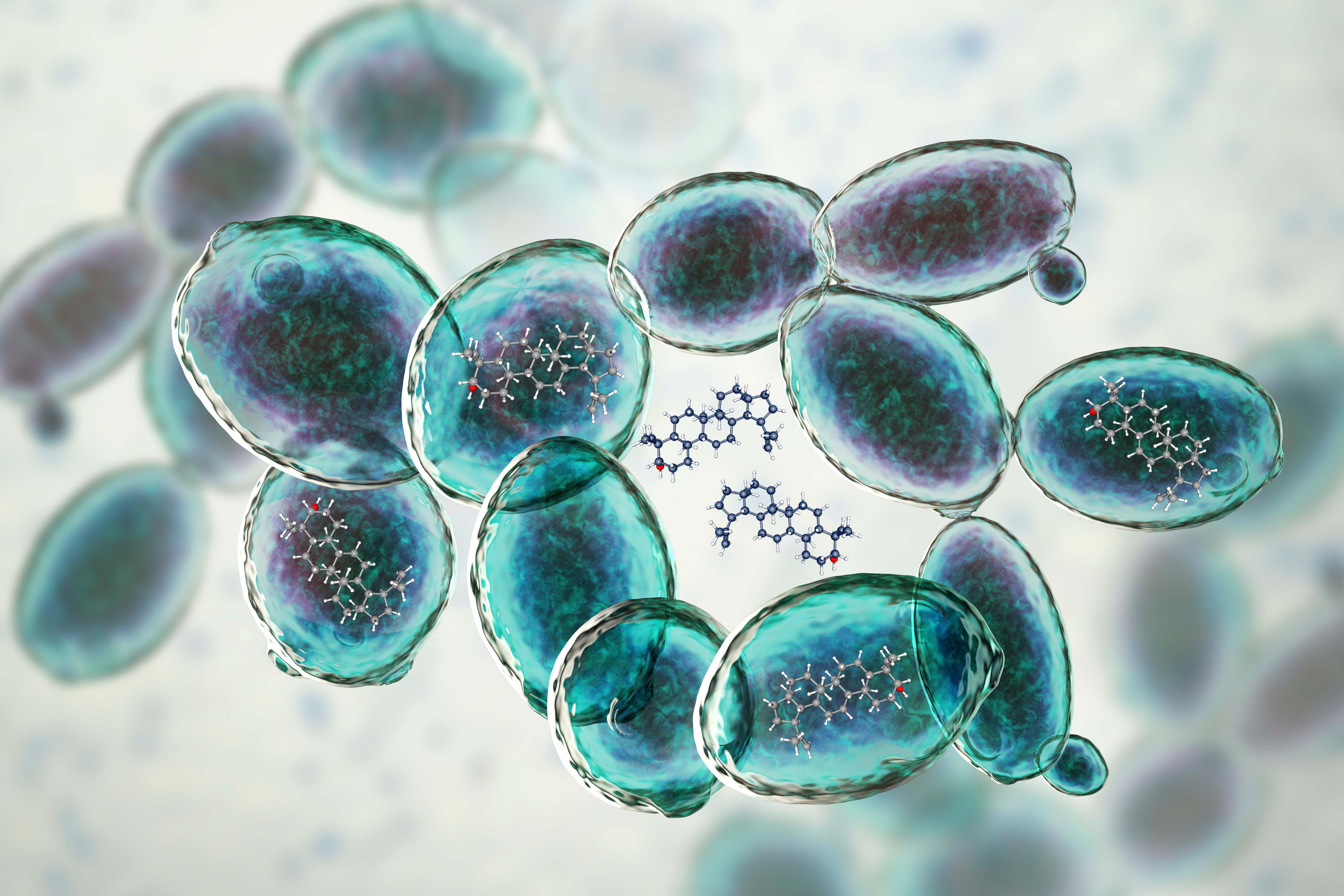
Triterpenoids are one of the largest and most diverse groups of natural products found in plants, with thousands of known compounds. Plants use triterpenoids for specialized roles, such as pest defense and pollinator attraction, rather than for primary growth. Their complex structures arise from over 100 triterpene scaffolds that can be modified further to create remarkable chemical diversity.
Many cyclic triterpenoids exhibit antimicrobial, antioxidant, anticancer, and anti-allergic properties, making them promising candidates for agricultural, pharmaceutical, and cosmetic applications. However, extracting them from plants is resource-intensive and delivers variable yields, and is often unsuitable for large-scale, sustainable production. Chemical synthesis is also challenging due to the compounds' structural complexity and the formation of unwanted byproducts.
In line with the bioeconomy, there is a need for sustainable, alternative production and purification systems.
For many years, we have focused on the biosynthesis of triterpenoids in yeast.
Discover our patented yeast platform, Saccharomyces cerevisiae, the smart solution for the sustainable, scalable production of high-quality, plant-based natural compounds.
The benefits
- Sustainable and reliable production Transferring knowledge about plant enzymes to the robust microbial cell factory Saccharomyces cerevisiae enables the production of active ingredients of consistently high quality while conserving resources.
- Complex replication of plant metabolic pathways The platform enables the complete recombinant production of natural plant intermediates and end metabolites, including complex oxidation and glycosylation steps.
- High yields and scalability Through optimized fermentation processes (fed-batch) and genetic modification of regulatory networks, we achieve product concentrations in the gram range (up to 10% of the cell mass).
- Modularity for various active ingredients The patented platform can be flexibly expanded to include monoterpenes and sesquiterpenes, with a particular focus on anti-inflammatory and antimicrobial active ingredients.
- Safety and regulatory advantages (GRAS status) As a well-characterized GRAS ("Generally Recognized as Safe") organism, baker's yeast significantly facilitates the regulatory approval of the produced active ingredients—a decisive advantage for medical and cosmetic applications.


