 Fraunhofer Institute for Molecular Biology and Applied Ecology IME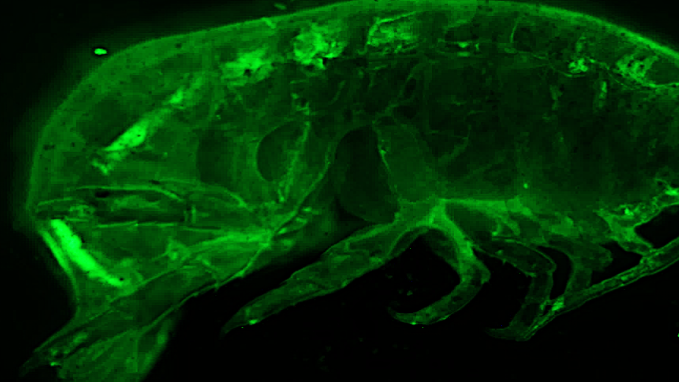
Increasing amounts of manufactured nanomaterials (MNMs) are produced for their industrial use and released to the environment by the usage or disposal of the products. As depending on their annual production rate, substances are subjected to PBT assessment, the availability of reliable methods to evaluate these endpoints for (corresponding) nanoforms/MNMs becomes relevant.

New Test System for Bioaccumulation Studies
The classical method to elucidate the bioaccumulation potential of chemicals has been the flow-through study with fish, which has limitations as regards meeting the requirements of MNMs. Most MNMs tend to sediment in the aquatic environment. Thus, maintenance of stable exposure conditions for bioaccumulation testing with fish is nearly impossible to achieve when using MNMs. Corbicula fluminea, a freshwater filter-feeding bivalve distributed worldwide, has been previously shown to ingest and accumulate MNMs present in the water phase. To investigate the suitability of C. fluminea for bioaccumulation testing we developed a new flow-through system to expose mussels under constant exposure conditions (Fig. 1). Bioaccumulation studies with the freshwater bivalve C. fluminea on two nanoparticles, the AgNP NM 300K and the TiO2NP NM 105, demonstrated the suitability of the new test system. The results obtained with this test system can be used to generate useful endpoints required for regulatory purposes and could be included in a tiered bioaccumulation testing strategy for manufactured nanomaterials (Kuehr et al., 2020, Ref. 1).
Nano-HYBIT
Another promising approach for bioaccumulation testing of nanomaterials (NMs) may be the bioaccumulation test using the benthic freshwater amphipod Hyalella azteca (HYBIT) that was described by Schlechtriem et al., 2019 (Ref. 2). H. azteca is a well established test organism for ecotoxicological studies and is sensitive to environmental chemicals and metals in the environment. The amphipod can be easily cultured in the laboratory, is available all year round and shows a high reproduction rate and fast growth. H. azteca has already been successfully used in studies on the bioavailability of NMs present in the water, sediment or sewage sludge. Therefore, the benthic species might also be a suitable test organism for the determination of the bioaccumulation potential of NMs.
A study at Fraunhofer IME has shown that bioconcentration and biomagnification studies with H. azteca in an adapted test system are suitable for testing the bioaccumulation potential of metal and metal oxide nanoparticles (NPs). The test concept presented allows testing of NMs under controlled test conditions and provides results of high value which might be considered within a tiered approach for bioaccumulation assessment of NPs (Kuehr et al., 2020, Ref. 3).
Tiered Approach for Testing Nanomaterials
An assessment scheme for bioaccumulation assessment of MNMs was presented by Kuehr et al. 2021 (Ref. 4). The results from amphipod bioconcentration and biomagnification tests can be included in the tiered assessment allowing a clear grading of the tested nanomaterials as “bioaccumulative” or “non-bioaccumulative.” Due to the worst-case scenario of the amphipod test, this approach may allow a waiver of further vertebrate tests.